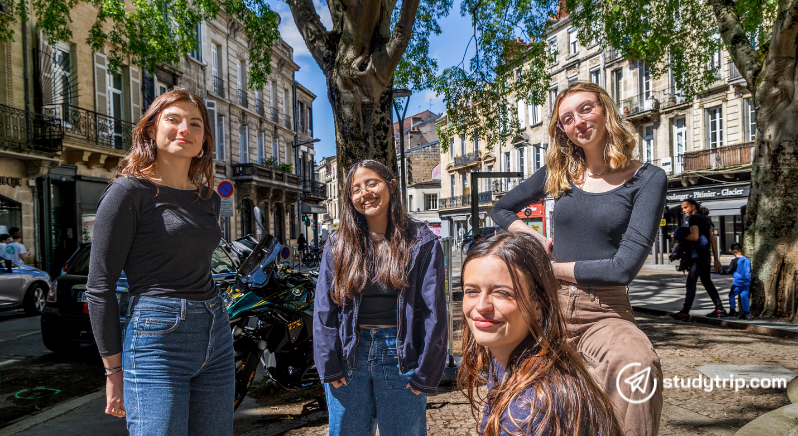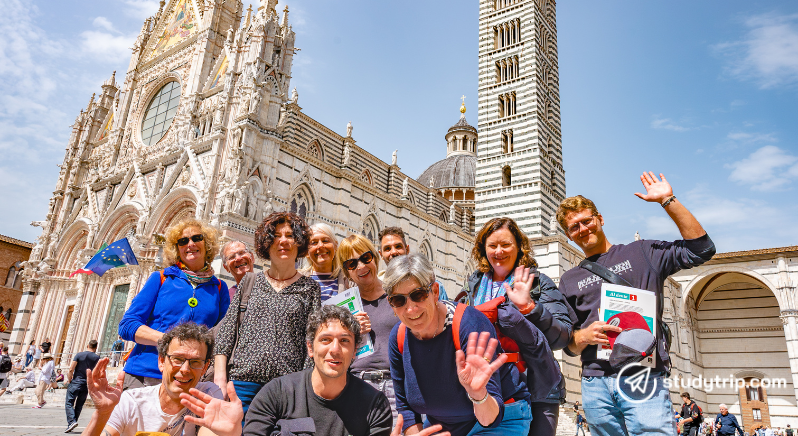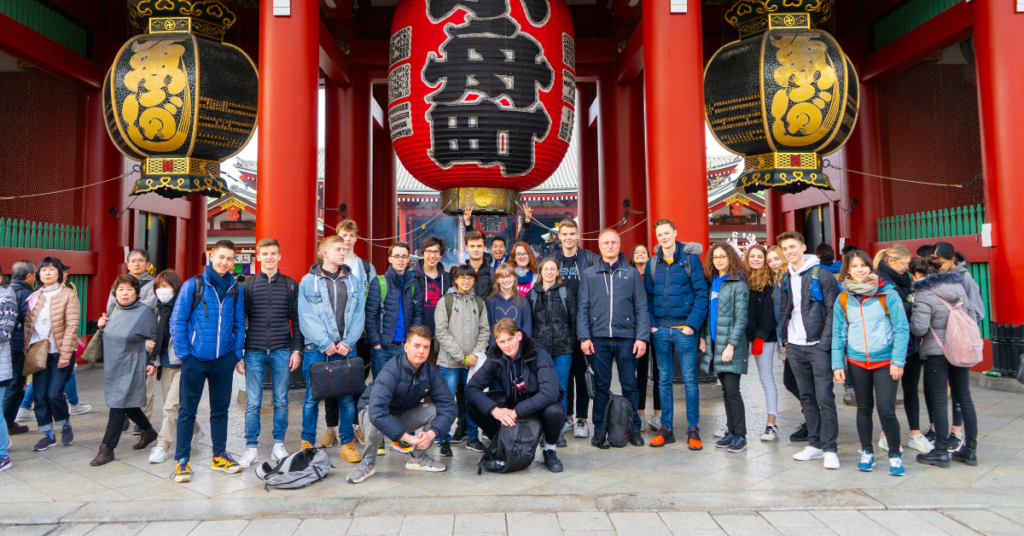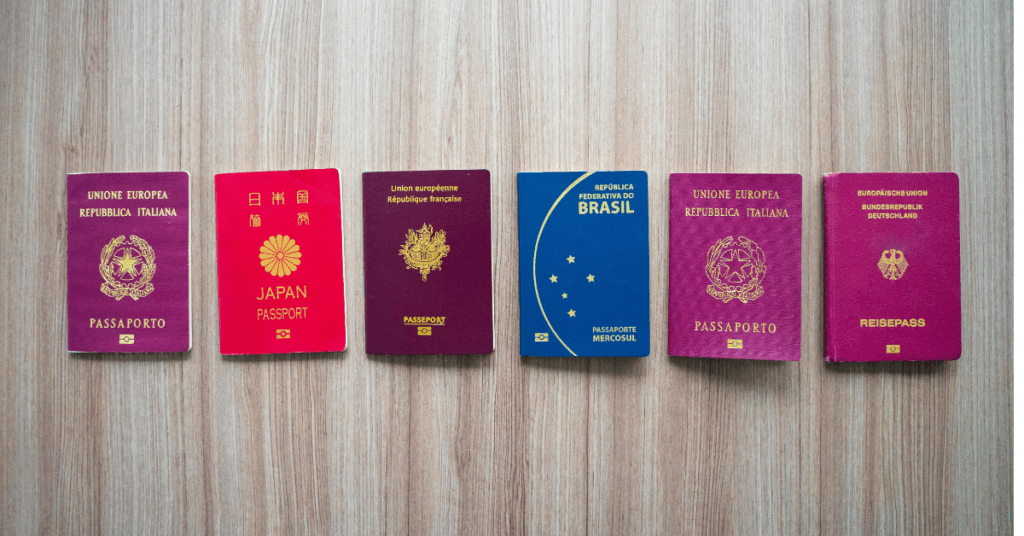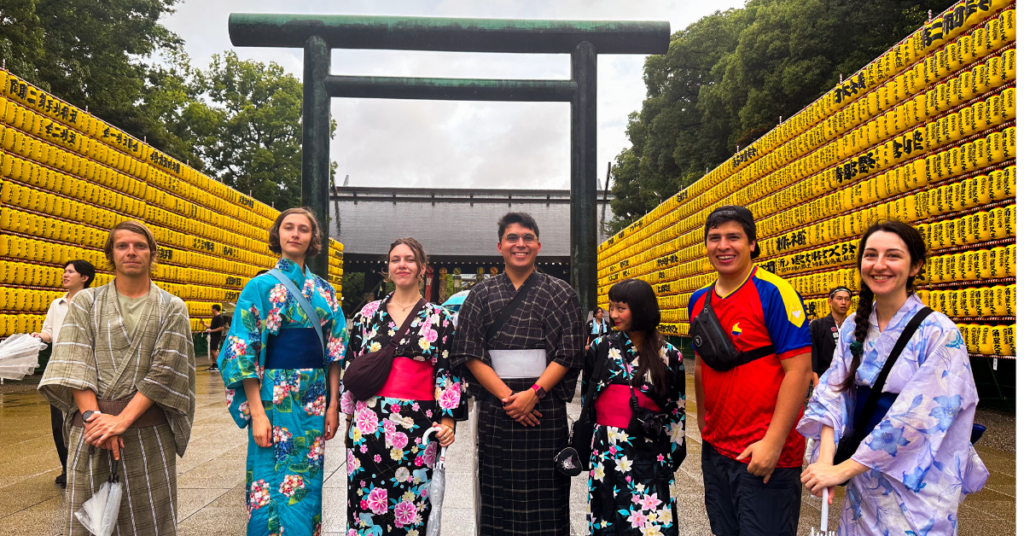
Students often tell us that after they return home from a study trip, they are not only more confident using the language but also more motivated to learn. Even total beginners, who have only just started studying, say they cannot believe how much progress they made in such a short time simply by being surrounded by the language.
This confidence does not come only from classroom lessons alone. It comes from being placed in real, everyday situations where the language is used for a purpose and from seeing the connection between the textbook and real life. This is where well-designed cultural activities play a key role in language learning on study trips.
Why Cultural Activities Matter
Cultural activities are different from standard sightseeing which you can typically experience on an organized group tour. While these have value, and are great for getting acquainted with a city or learning basic history, a walking tour or a visit to a famous monument is passive. Students listen, observe, and move on. A cultural activity requires them to participate, to try something, talk to someone, or solve a small challenge that naturally pushes them to use the target language. This active involvement naturally pushes them to use the target language in a meaningful way.
During a good cultural activity, students naturally:
- Listen for overall understanding rather than perfection
- Ask follow up questions
- Interact with locals
- Gain a deeper understanding of context, etiquette, and cultural nuance
- Remember vocabulary because it is tied to a lived moment
For teachers planning study trips, these moments are where classroom learning becomes real and memorable.
Below are examples of the types of immersive activities that bring language learning to life across some of our favorite destinations.
Japan: Real Communication Through a Local Exchange BBQ
In Japan, one of the most meaningful ways for students to connect classroom learning with real life is through a local exchange activity. One of our favorite examples is a summer BBQ party. Students receive a simple shopping list in Japanese and head to a neighborhood supermarket to buy ingredients for a barbecue. They need to ask staff where items are located, check quantities, and confirm prices, which creates a natural opportunity to use everyday Japanese in a low pressure setting.
After shopping, the group meets Japanese locals at a nearby park for a shared BBQ. The atmosphere is relaxed and friendly. Students practice greetings, introduce themselves, and learn casual everyday expressions that rarely appear in textbooks. Conversations flow easily while everyone prepares food together, and students often end up teaching and learning small cultural differences on both sides.
The combination of task based learning at the supermarket and real interaction with local people helps students realize how much they can already communicate. It boosts confidence, encourages curiosity, and shows the true value of immersive experiences.
France: Perfume-Making Workshop
In France, a perfume-making workshop is a simple yet powerful way for students to see language come to life. Guided by a local perfumer, students learn the vocabulary of scents and ingredients, follow step-by-step instructions, and describe the kind of fragrance they want to create. It’s hands-on, and full of natural opportunities to listen, respond, and clarify in French. By the end, students walk away with a custom perfume and a clear sense of how everyday communication builds confidence just as much as anything learned in the classroom.
Italy: Learning History and Expression Through Art
In Italy, a hands-on art workshop lets students experience creativity the way locals do. Inside a local studio, an artist guides them through the basics of sketching, watercolor, or mixed-media techniques. Students learn simple vocabulary for tools, colors, and artistic styles, then put it to use as they follow instructions and ask for feedback in Italian. It’s active, engaging, and surprisingly confidence-boosting. By the end, each student leaves with a piece of artwork that reflects not only their time in Italy, but the language they used to create it.
Spain: Flamenco Rhythm and Conversation in Andalusia
Sightseeing in Spain often focuses on cathedrals and plazas, which are of course beautiful, but one of the most immersive activities is a flamenco rhythm workshop.
Students step into a local tablao and learn the foundations of palmas (clapping rhythms), footwork, and posture. The instructor introduces each technique in Spanish and teaches the cultural story behind flamenco such as its origins, symbolism, and emotion.
Even without prior dance experience, students quickly find themselves repeating instructions, counting beats aloud, and asking questions in Spanish. The energy of the class makes the experience memorable and gives them a strong connection between language and movement.
Korea: Moving, Listening, and Speaking Through Taekwondo
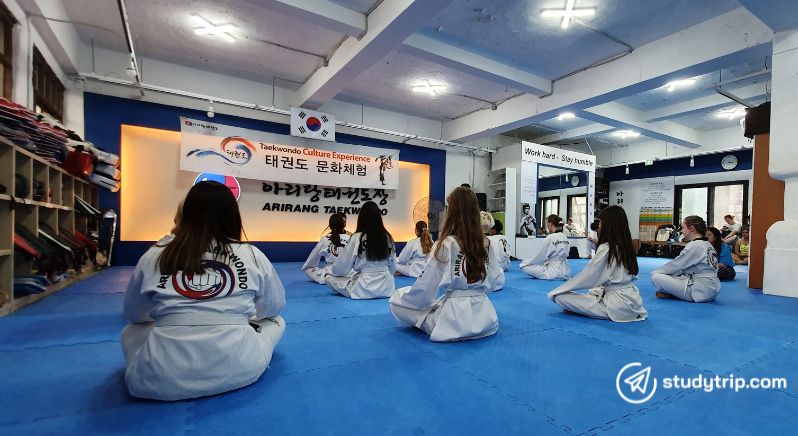
In Korea, taking part in a traditional Korean sport like taekwondo gives students a memorable mix of movement, discipline, and language practice. At a local dojang, an instructor introduces basic stances, simple commands, and key vocabulary tied to balance, respect, and technique. Students listen closely, follow instructions, and repeat phrases as they move through the routine. The physical element keeps them focused, but it’s the real-time communication, the “again,” “faster,” “good posture,” “ready,” that makes the language stick. By the end, students not only remember the moves, but also the Korean words and expressions that guided them through the experience.
The Lasting Impact of Cultural Activities on Language Learning
This is not to say that sightseeing has no value. Visiting landmarks or historic sites can absolutely enrich a study trip by giving students important cultural and historical context. However, cultural activities like the ones described above offer a different level of engagement. They place students in real situations where they need to listen, respond, and use the language with a purpose. Research supports this approach. However, cultural activities offer a different level of engagement.
A 2024 study titled “The Impact of Immersive Courses on Second Language Ability and Cultural Adaptation” found that programs built around hands-on cultural experiences or immersion led to measurable improvements in both language development and cultural adaptation.
These findings suggest that structured cultural activities help students connect the classroom to real life and retain what they learn long after the trip ends.
The Advantage for Teachers: We Handle the Research, Logistics, and Customization
It’s no secret that cultural activities can transform a study trip. Researching options, checking safety standards, confirming quality, and handling bookings across different countries can also become overwhelming for busy teachers.
This is where our experience makes a difference.
Our team has long standing relationships with trusted local partners in Japan, France, Italy, Spain, and Korea, and we design activities specifically for student groups. We can customize the experience to suit:
- Age level
- Language proficiency
- Group interests
- Curriculum goals
- Budget and time constraints
Whether you want to deepen language learning, introduce cultural history, or create an unforgettable hands on experience, we can craft a program that fits your group perfectly.
Ready to Plan Your Next Study Trip?
If you are looking for meaningful cultural activities that reinforce classroom learning, we are happy to help. Our team can take care of the research, reservations, and coordination so you can focus on supporting your students.
Get in touch with us for a free consultation and start designing a customized educational trip that brings language learning to life.